
Slaughter Family - Wellington
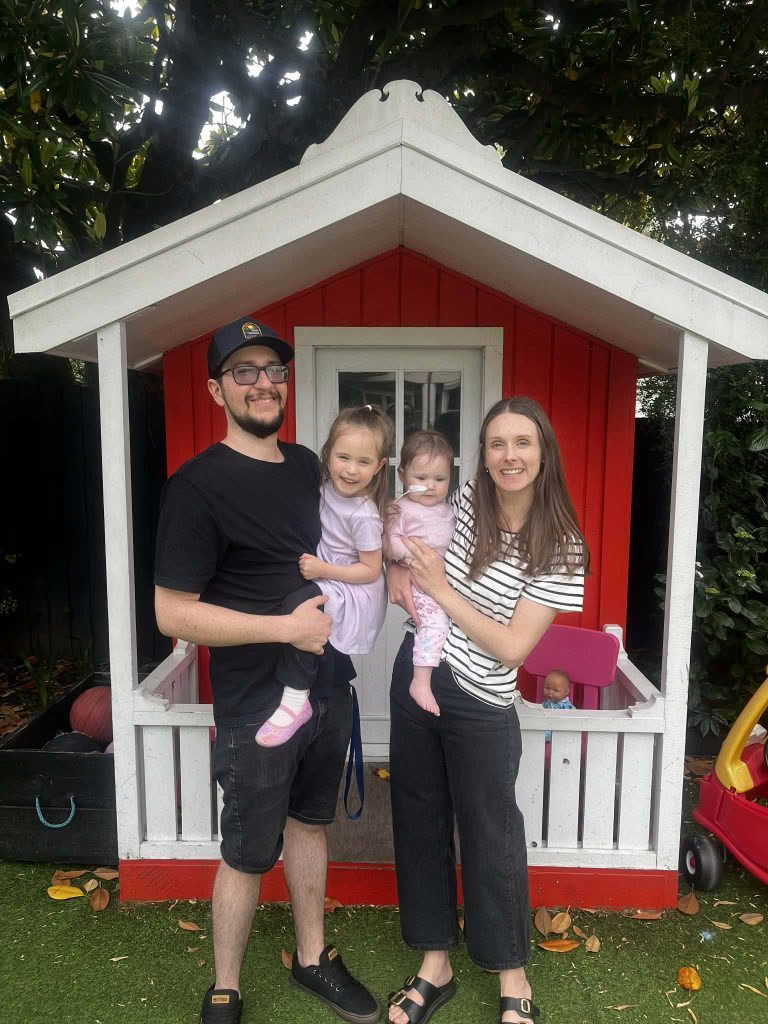
Early last year, life for the Slaughter family looked much like any other young family finding joy in the everyday. Jordan and Ashleigh lived with their two daughters – four-year-old Bailey, and newborn baby Layla - high in the Kingston hills. Family time was everything: beach trips, playground adventures, scooter rides, and afternoons soaked in laughter and water play. “Water is definitely a favourite in our house,” Ashleigh laughs, “with two enthusiastic splashers, we all end up absolutely soaked.” On rainy days, the lounge floor would disappear beneath Lego and Duplo creations, towers built and rebuilt by little hands, with Mum and Dad right alongside them. It was a busy, happy life; one full of sunshine, imagination, and plans for the future.
But when Layla was just three months old, Ashleigh noticed something wasn’t right.
“She just kept getting paler and paler,” Ashleigh recalls, “then there was blood in her nappy that wouldn’t go away.” What followed were GP visits, a growing sense of unease, and unexplained bruises appearing on Layla’s tiny body. At a follow-up appointment in early March, Ashleigh was told an urgent referral had been sent to Wellington Hospital. If anything worsened, they were to go straight to Emergency.
The next morning, Layla woke with a rash of tiny red and purple dots (petechiae) spreading across her hands and feet. By the afternoon, Ashleigh didn’t hesitate. She collected Bailey from daycare and took both girls straight to ED. Because of the rash, doctors initially feared meningitis. Blood tests were taken, and Layla was admitted overnight. Ashleigh remembers being given medication and being told gently not to look it up. 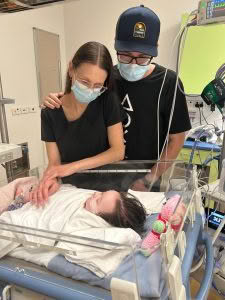
“They said it would only worry us,” she says, “and that they wanted Jordan there in the morning.” The next day, at 10.30am, their world shattered. “They told us it was leukaemia,” Ashleigh says quietly. “And that Life Flight would be there in two hours to take us straight to Christchurch.”
Layla was just four months old.
Jordan raced home to grab clothes. Layla received her first blood transfusion. There was no time to process, no time to grieve the life they had known only hours earlier. By the next day, the diagnosis was confirmed: precursor B-cell acute lymphoblastic leukaemia; infantile leukaemia. Aggressive. High risk. Treatment needed to start immediately.
“I remember thinking how unfair it was,” Ashleigh says. “She’s just so small. So innocent. What could she possibly have done to deserve this?”
In Christchurch, Layla was taken straight to high care. Within 24 hours she had undergone surgery to insert a central line, had a bone marrow biopsy, a lumbar puncture, and began her first cycle of chemotherapy.
Everything happened fast, but Ashleigh and Jordan were grateful for the urgency. With infant leukaemia, speed can mean survival.
After two days, Layla was transferred to the CHOC ward. Despite the warnings about side effects, she coped well initially. Two weeks later, the family was discharged to Ronald McDonald House, attending daily outpatient appointments. For the first time since diagnosis, they were together again.
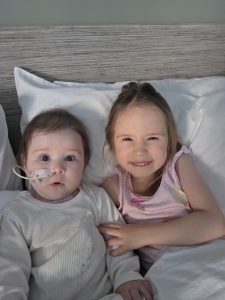 “It was incredible seeing how settled Bailey was at Ronald McDonald House,” Ashleigh says, “that eased so much of my guilt as a mum. I couldn’t always be with her in hospital - but she was happy, safe, and supported.”
Just one week later, everything changed again. Layla developed a severe infection. At 4am, Ashleigh rushed her back to hospital - thankful that Ronald McDonald House was only minutes away. By morning, Layla was lethargic and refusing feeds so a doctor checked her blood sugar; it was critically low.
A clinical emergency was called, and the room filled with doctors and nurses. Layla had gone into septic shock. “She had to be resuscitated twice,” Ashleigh remembers, “watching that happen to your baby…no parent should ever have to see that.”
Layla was sedated, intubated, and rushed to ICU. That night, doctors told Ashleigh and Jordan that Layla was critically unwell. She was on adult doses of adrenaline to keep her heart beating. At midnight, a retrieval team arrived and by 5am, Layla and Ashleigh were in Auckland.
Layla spent five days intubated in PICU, continuing chemotherapy while fighting for her life. Her body battled fluid overload, electrolyte imbalances, and severe reactions to treatment. Specialists from almost every discipline were involved in her care. “It felt like every team you could imagine was there,” Ashleigh says, “and we needed every single one of them.”
After two weeks, Layla was transferred back to Christchurch - but she wasn’t well for long. Severe inflammation spread through her muscles and brain. Her liver and gut began to fail. She returned to ICU, where the family spent Easter.
While Layla fought, big sister Bailey found joy at Ronald McDonald House. Easter bags filled with activities appeared at her door. “She just loved it,” Ashleigh says with a smile, “those small moments meant everything.”
What was meant to be eight weeks of treatment in Christchurch stretched into eight months: five intensive IV chemo cycles, more than 150 doses of chemotherapy and over 15 procedures under general anaesthetic. Layla even spent her first birthday at Ronald McDonald House.
Against expectations, Layla coped remarkably well with her final, most dangerous cycle of treatment. In December, her central line was removed and replaced with a port - a symbol of a new chapter. “A step closer to being a normal baby,” Ashleigh says. “That felt huge.”
Through it all, Ronald McDonald House was their anchor.
“The staff are what make it so special,” Ashleigh says, “the genuine care, the compassion - always checking in, always asking what we needed.” Having a place close to hospital, meals provided, a bed to sleep in, and space for Bailey to play lifted an enormous burden. “When we were rushed to Auckland, they didn’t hesitate,” Ashleigh recalls, “they had a room ready so I could sleep, and somewhere for Jordan and Bailey when they arrived. Without that support, I honestly don’t know how we would have coped.” 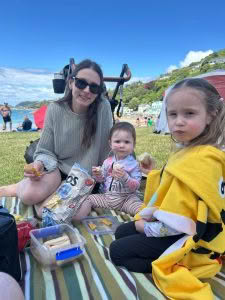
Today, the family is back home in Wellington - together. Layla won’t remember Ronald McDonald House, but it will always be part of her story.
“She spent most of her first year of life there,” Ashleigh says, “it became our second home. Bailey even calls it her ‘Ronald Donald home.’” For the Slaughter family, Ronald McDonald House wasn’t just accommodation. It was comfort. Stability. Community. And hope - when they needed it most.